Royal Bayreuth porcelain maple leaf molded creamer and small pitcher, both items have the blue mark which dates them to 1902.
Creamer: 6"x 3 1/2" x 3 1/2"
Small pitcher: 5" × 2 1/2" × 3"
gorgeous vintage Royal Bayreuth Bavarian porcelain
Maple Leaf set of 2 designed in maple leaves form, with green, yellow, and red shades and a comfortable handle made in a shape of a maple branch.
No chips no cracks.
This particular maple leaf design is a classic example of the Art Nouveau and Jugendstil influences prevalent in the late 19th and early 20th centuries. The naturalistic depiction of leaves, combined with the vibrant, gradient glaze, showcases the era's appreciation for organic forms and decorative artistry. Such pieces were popular as decorative objects and functional items like creamers or small pitchers, embodying the aesthetic sensibilities of the period.
Royal Bayreuth porcelain originated in Tettau, Bavaria, Germany, and was established in 1794. The company became renowned for its high-quality porcelain, particularly its decorative items and tableware, often featuring hand-painted designs, Their pieces are sought after by collectors for their artistic merit and craftsmanship, representing a significant part of German ceramic history.
Royal Bayreuth porcelain maple leaf molded creamer and small pitcher, both items have the blue mark which dates them to 1902.
Creamer: 6"x 3 1/2" x 3 1/2"
Small pitcher: 5" × 2 1/2" × 3"
gorgeous vintage Royal Bayreuth Bavarian porcelain
Maple Leaf set of 2 designed in maple leaves form, with green, yellow, and red shades and a comfortable handle made in a shape of a maple branch.
No chips no cracks.
This particular maple leaf design is a classic example of the Art Nouveau and Jugendstil influences prevalent in the late 19th and early 20th centuries. The naturalistic depiction of leaves, combined with the vibrant, gradient glaze, showcases the era's appreciation for organic forms and decorative artistry. Such pieces were popular as decorative objects and functional items like creamers or small pitchers, embodying the aesthetic sensibilities of the period.
Royal Bayreuth porcelain originated in Tettau, Bavaria, Germany, and was established in 1794. The company became renowned for its high-quality porcelain, particularly its decorative items and tableware, often featuring hand-painted designs, Their pieces are sought after by collectors for their artistic merit and craftsmanship, representing a significant part of German ceramic history.
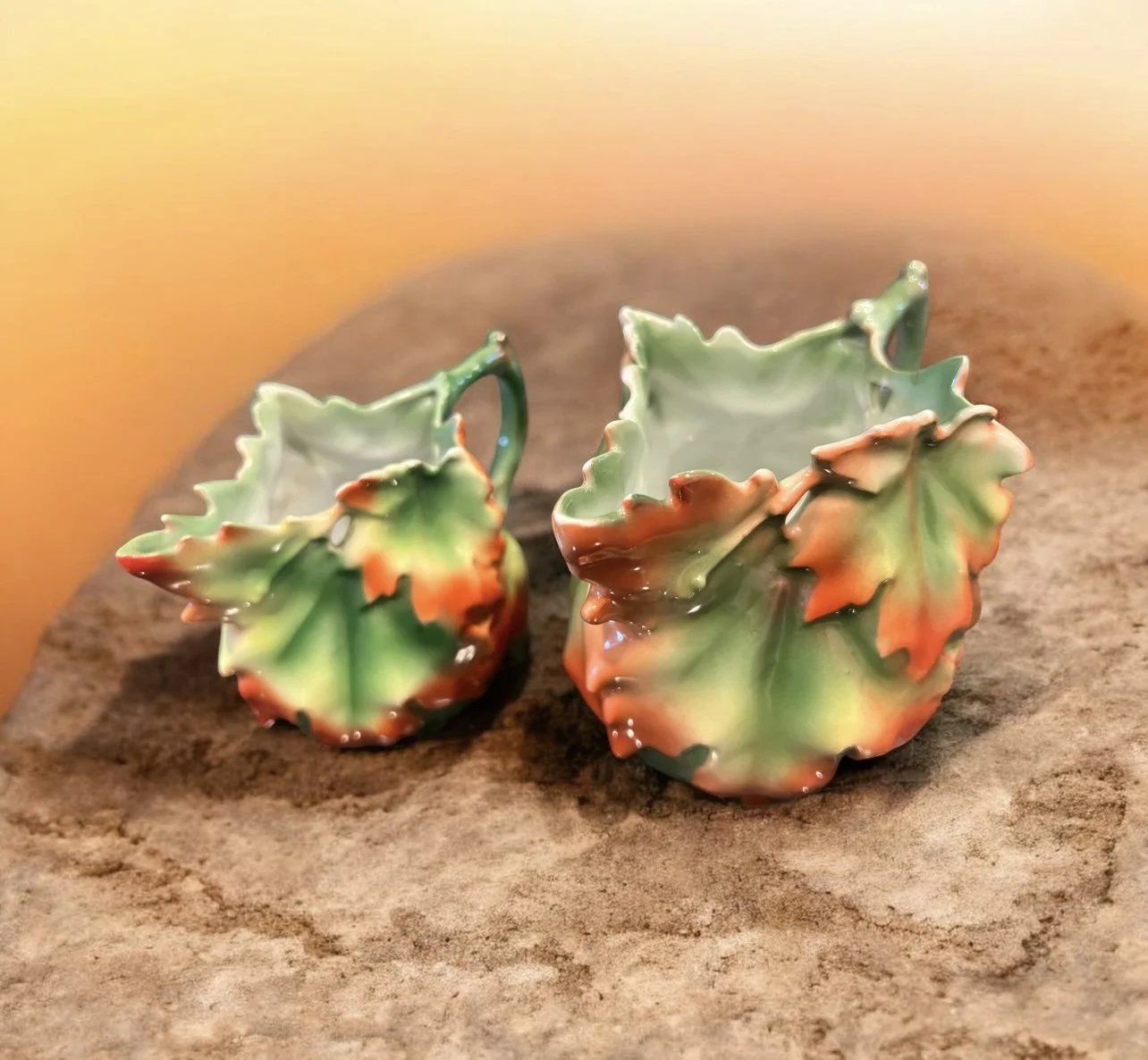 Image 1 of 11
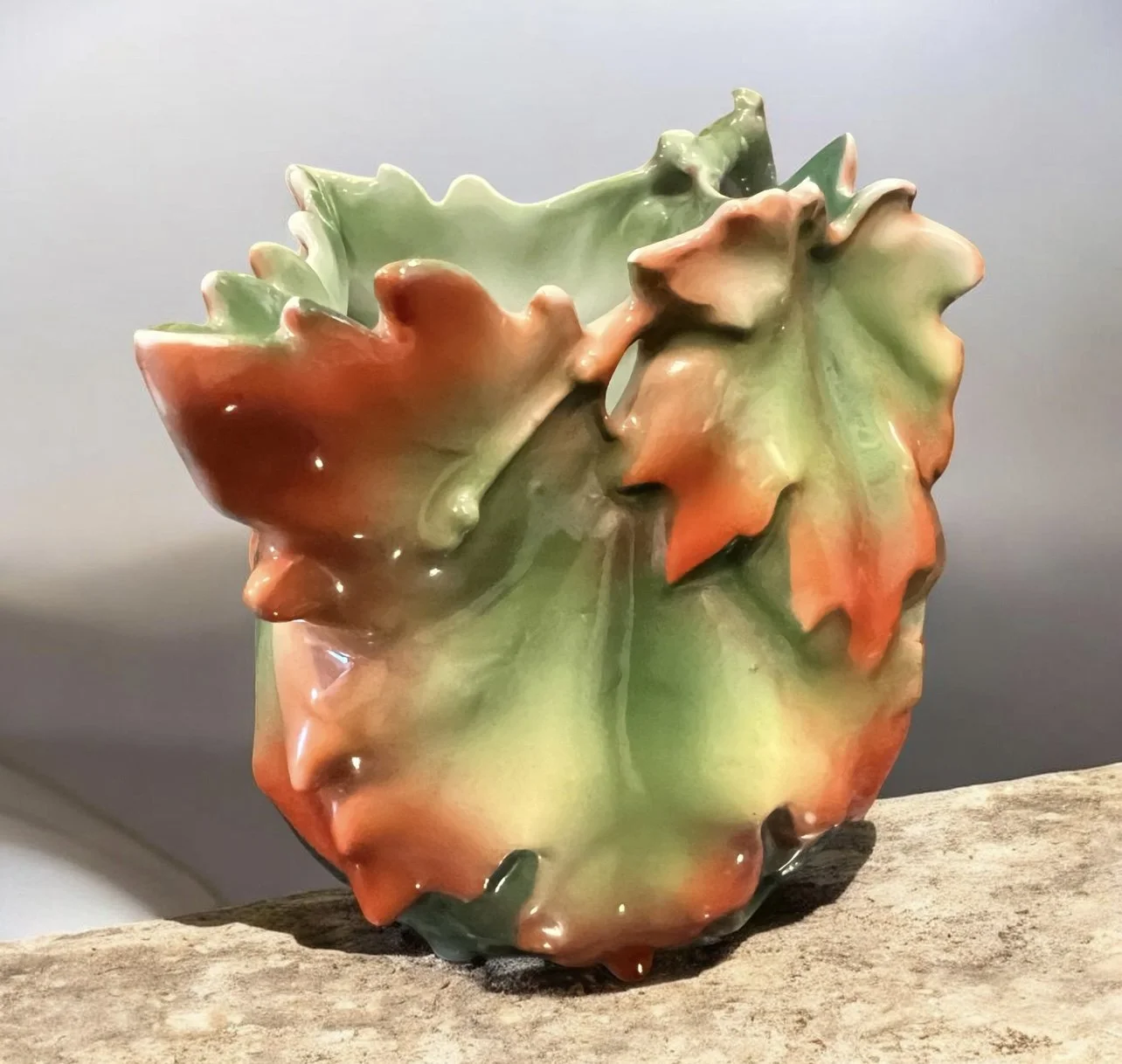 Image 2 of 11
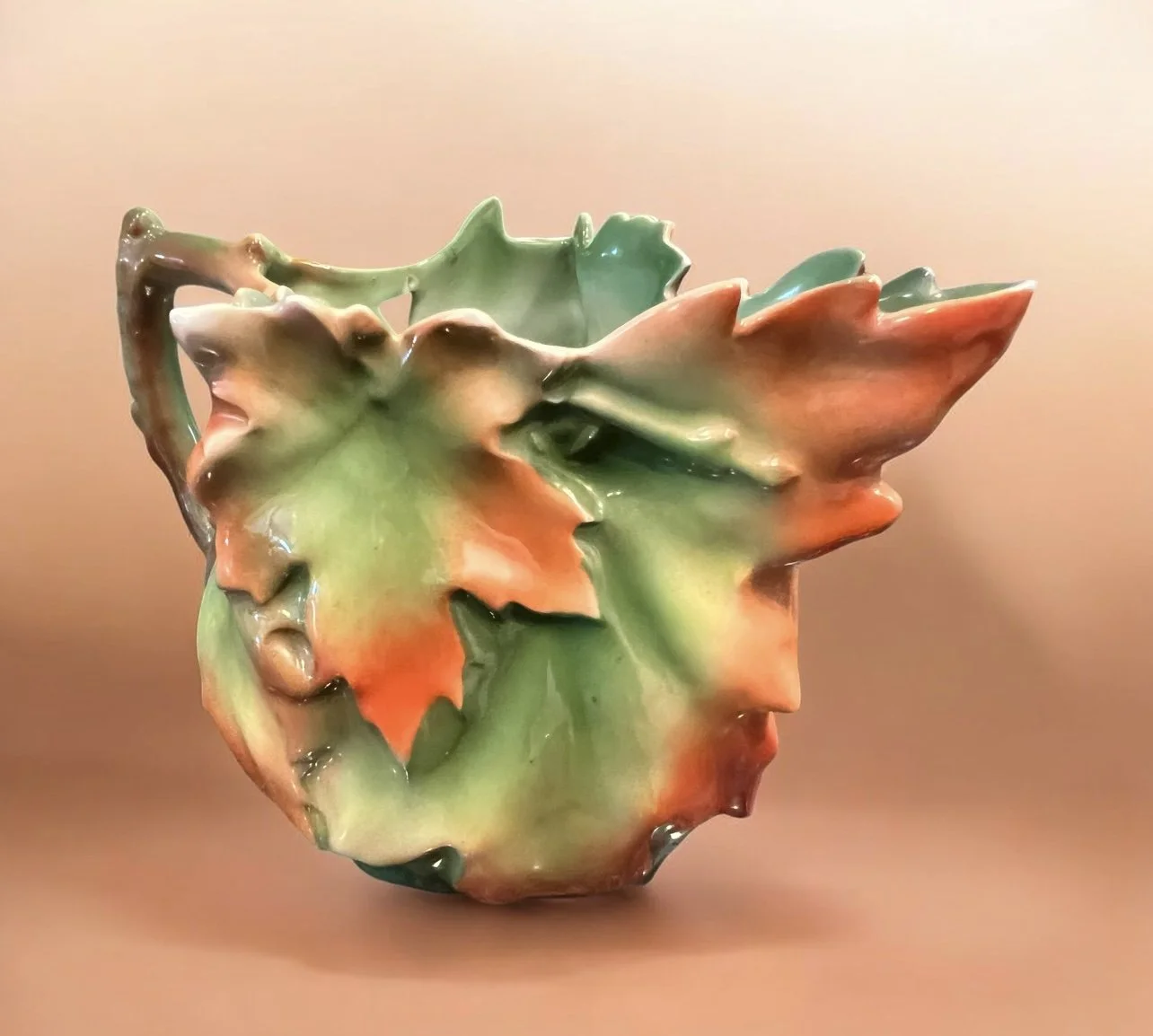 Image 3 of 11
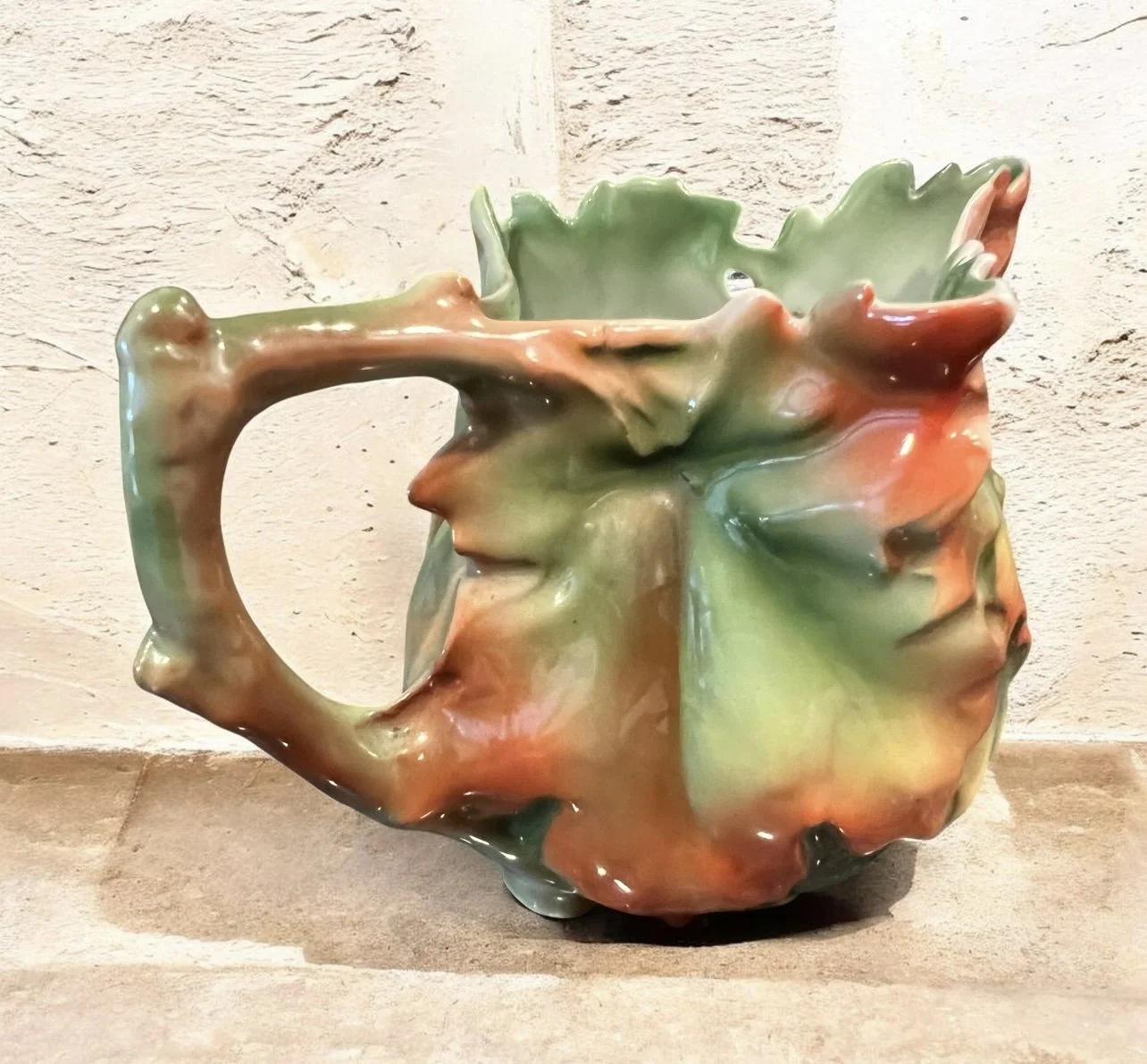 Image 4 of 11
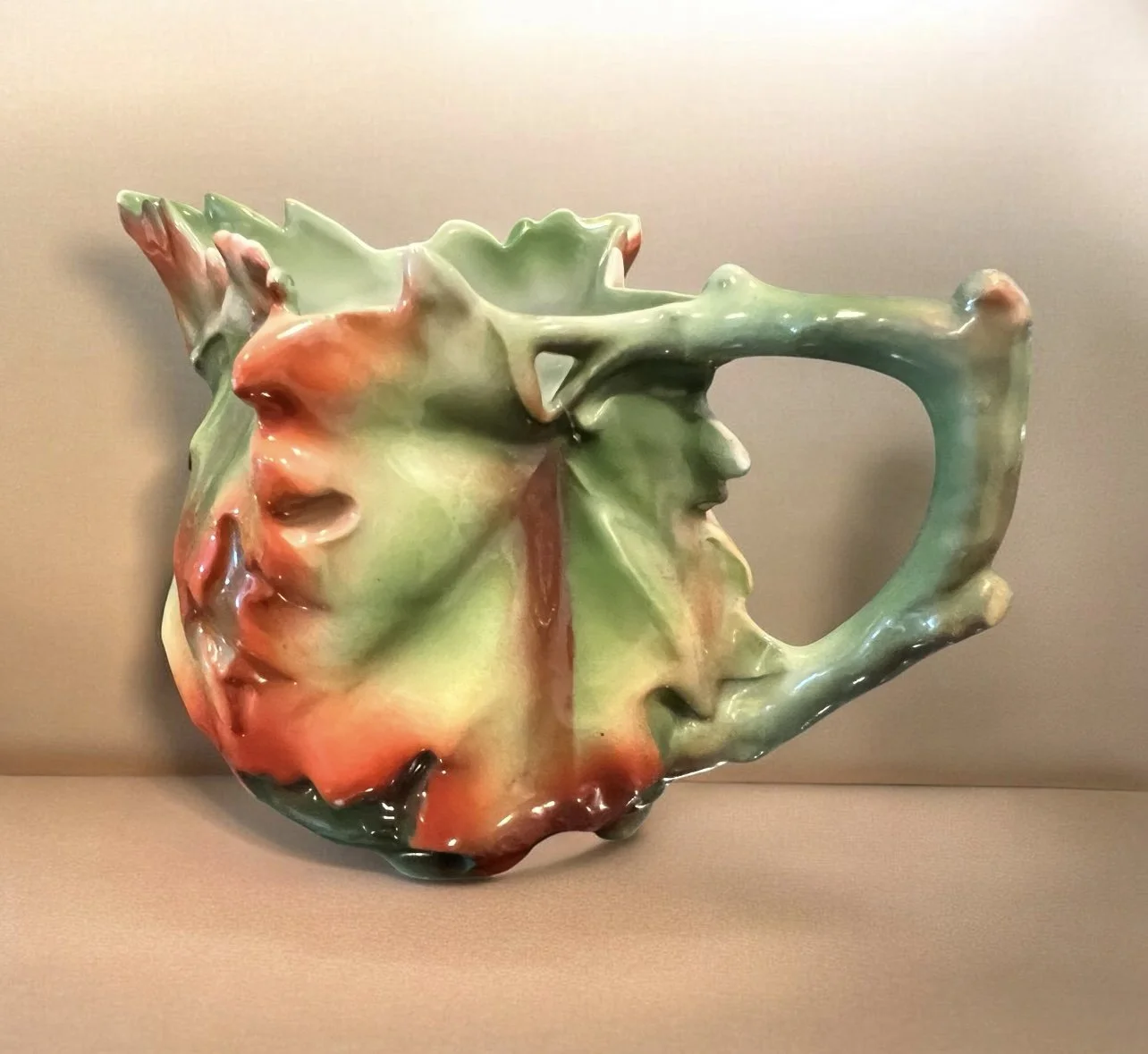 Image 5 of 11
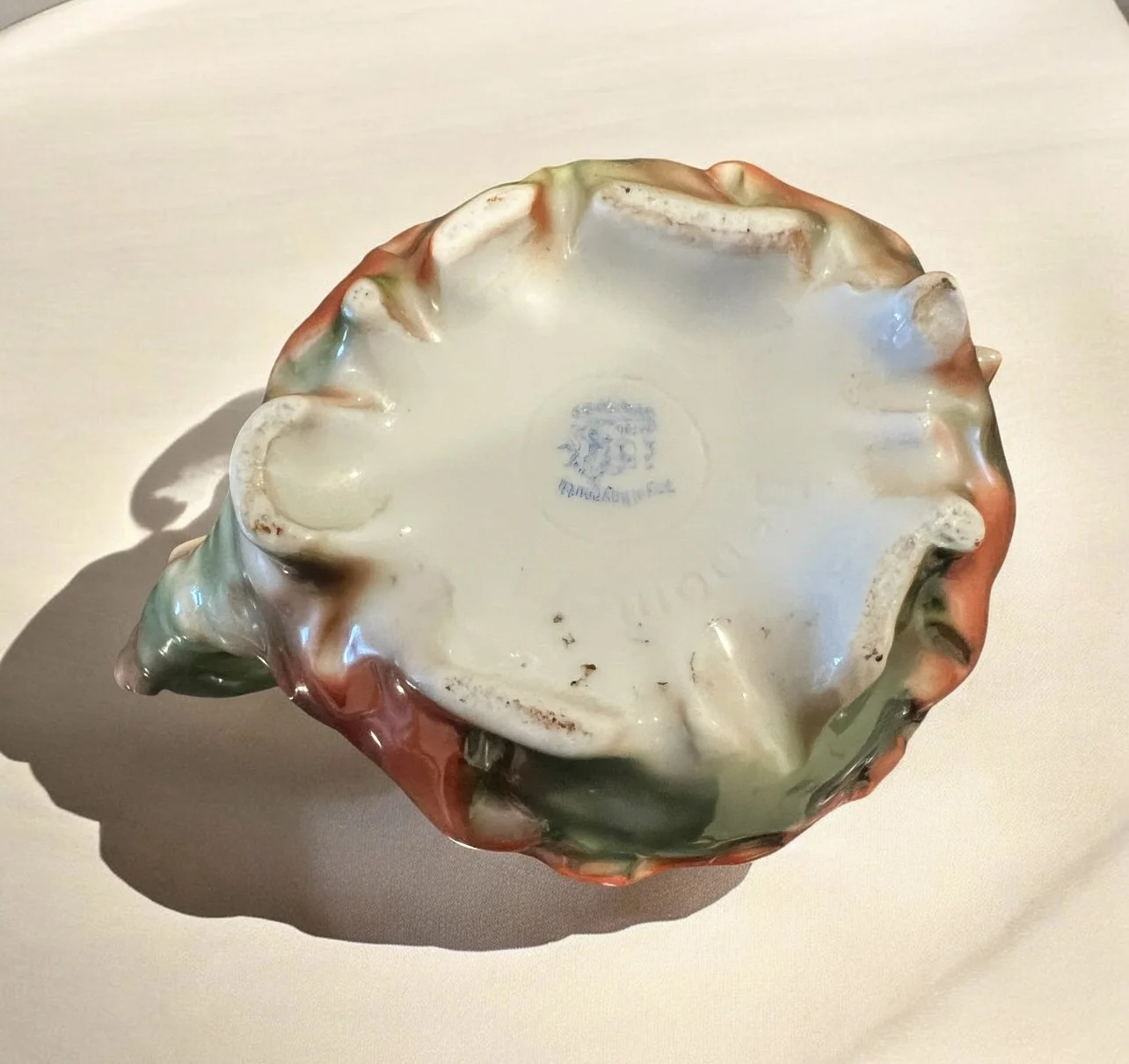 Image 6 of 11
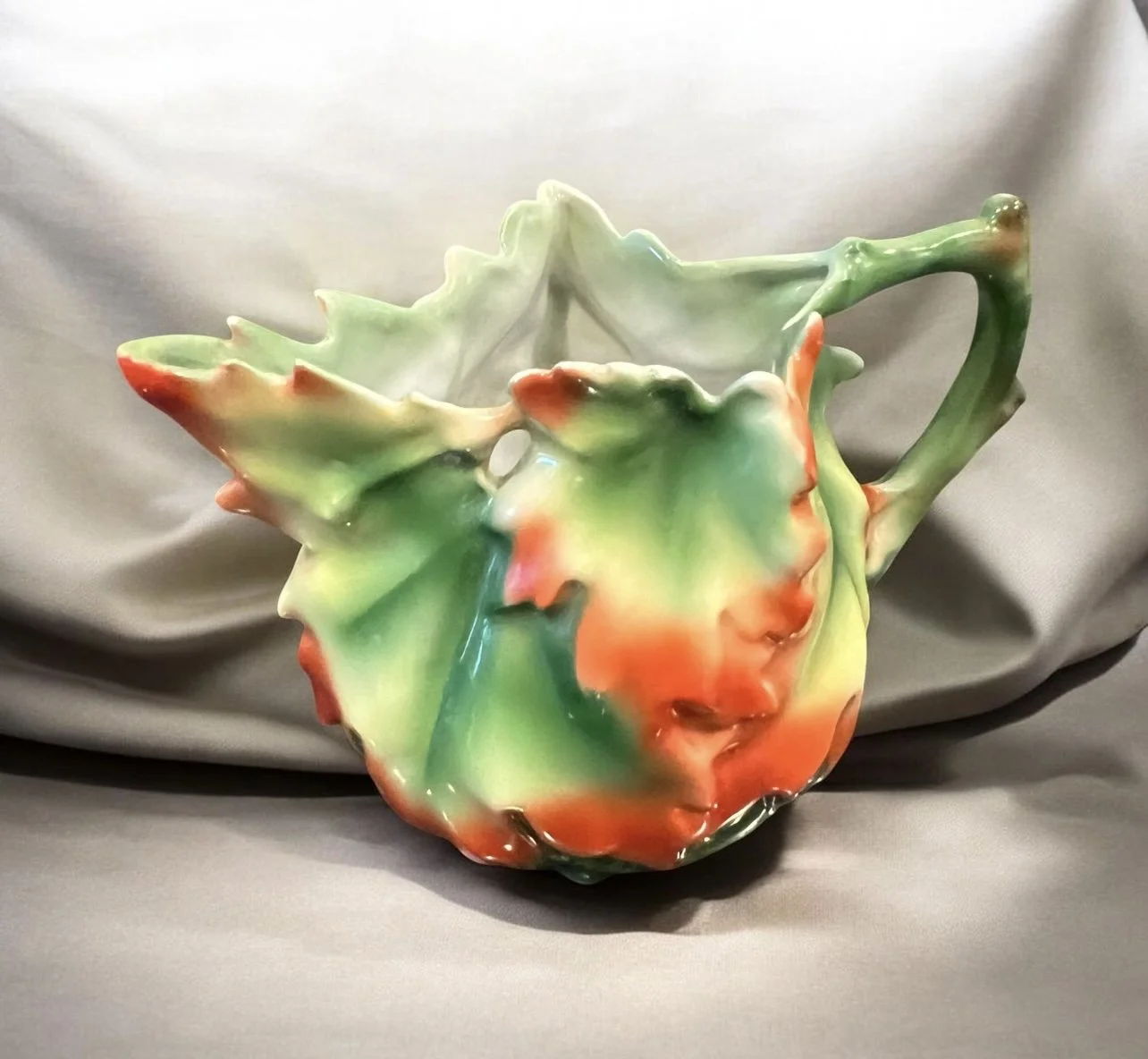 Image 7 of 11
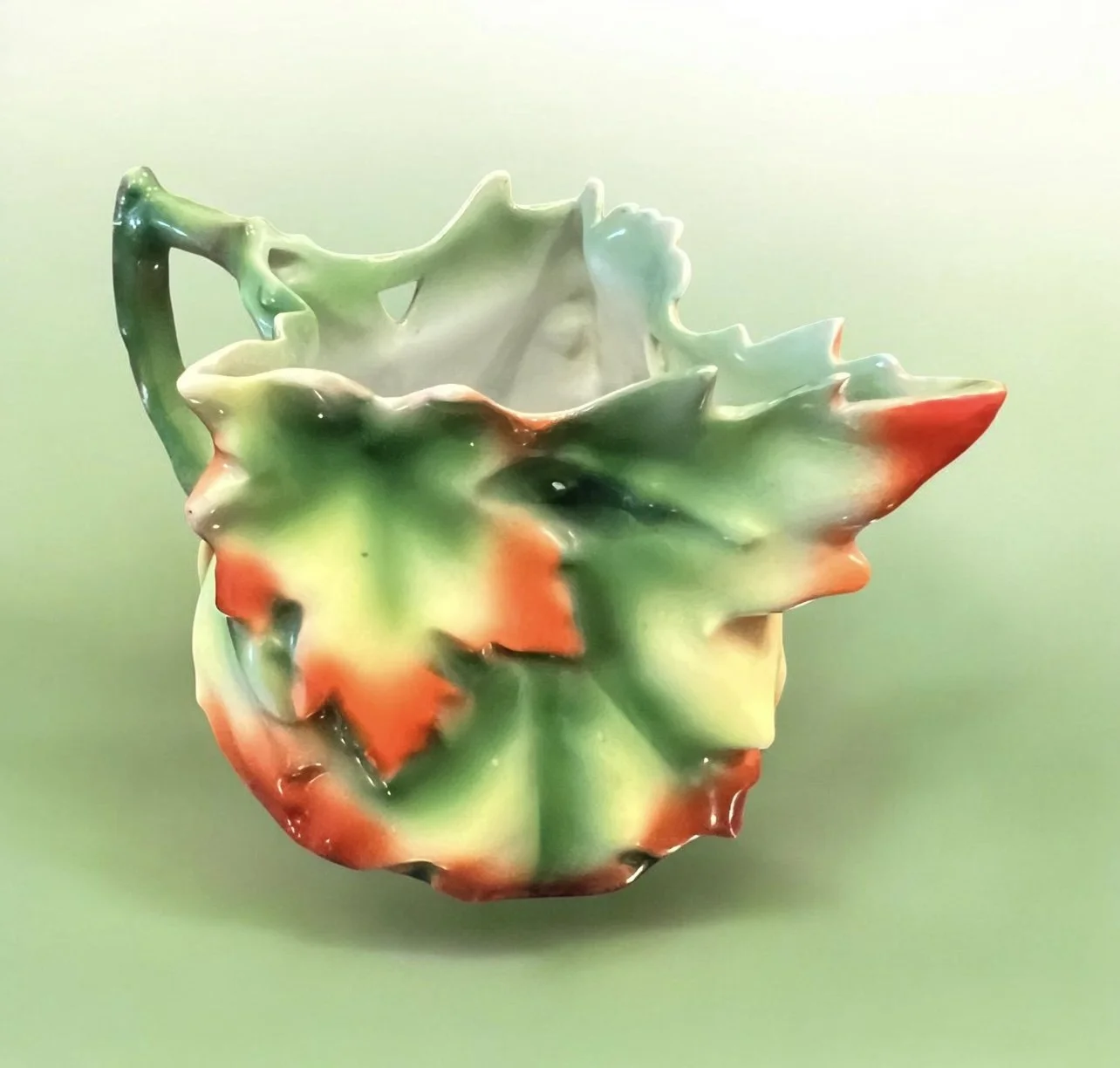 Image 8 of 11
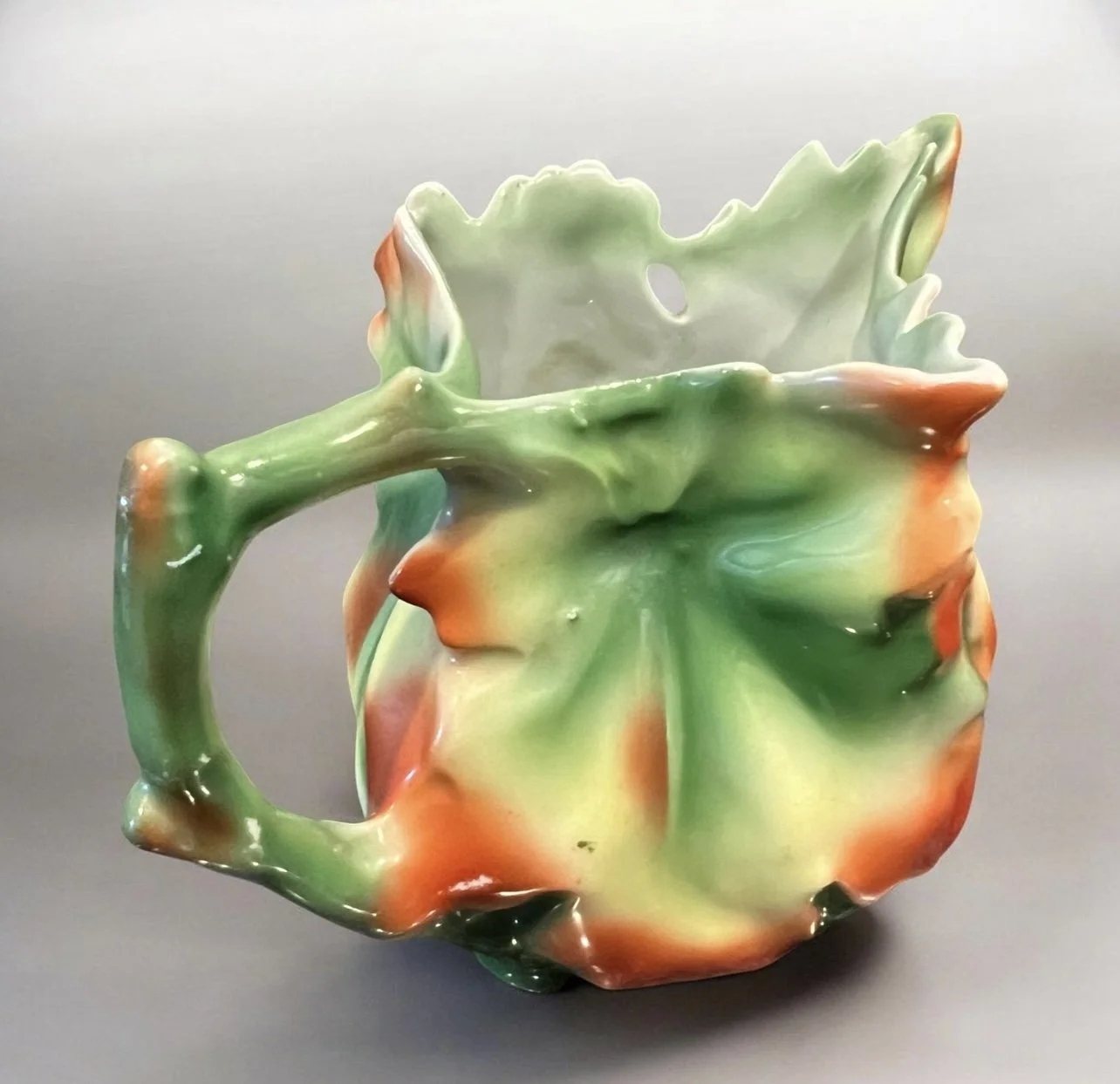 Image 9 of 11
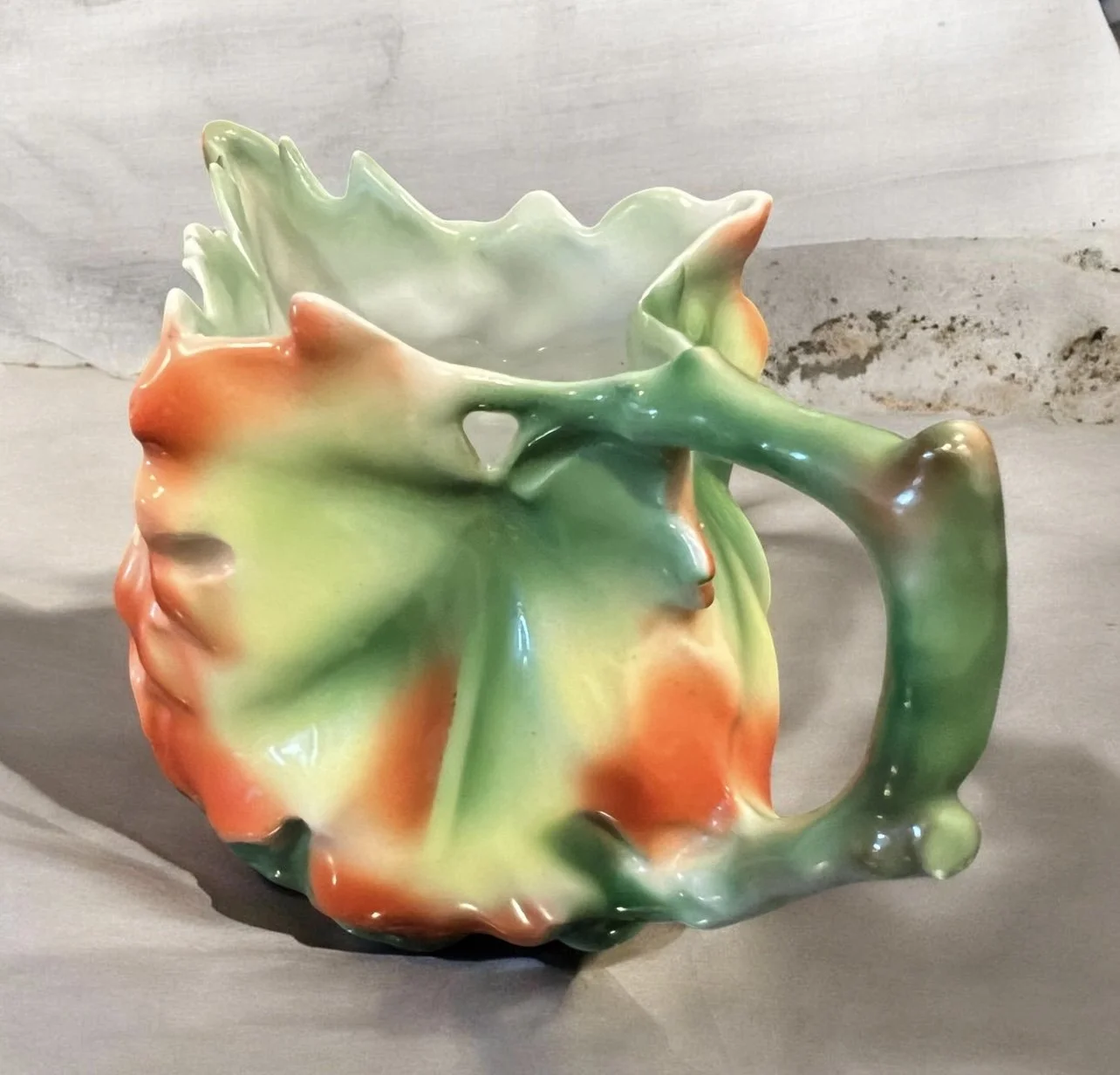 Image 10 of 11
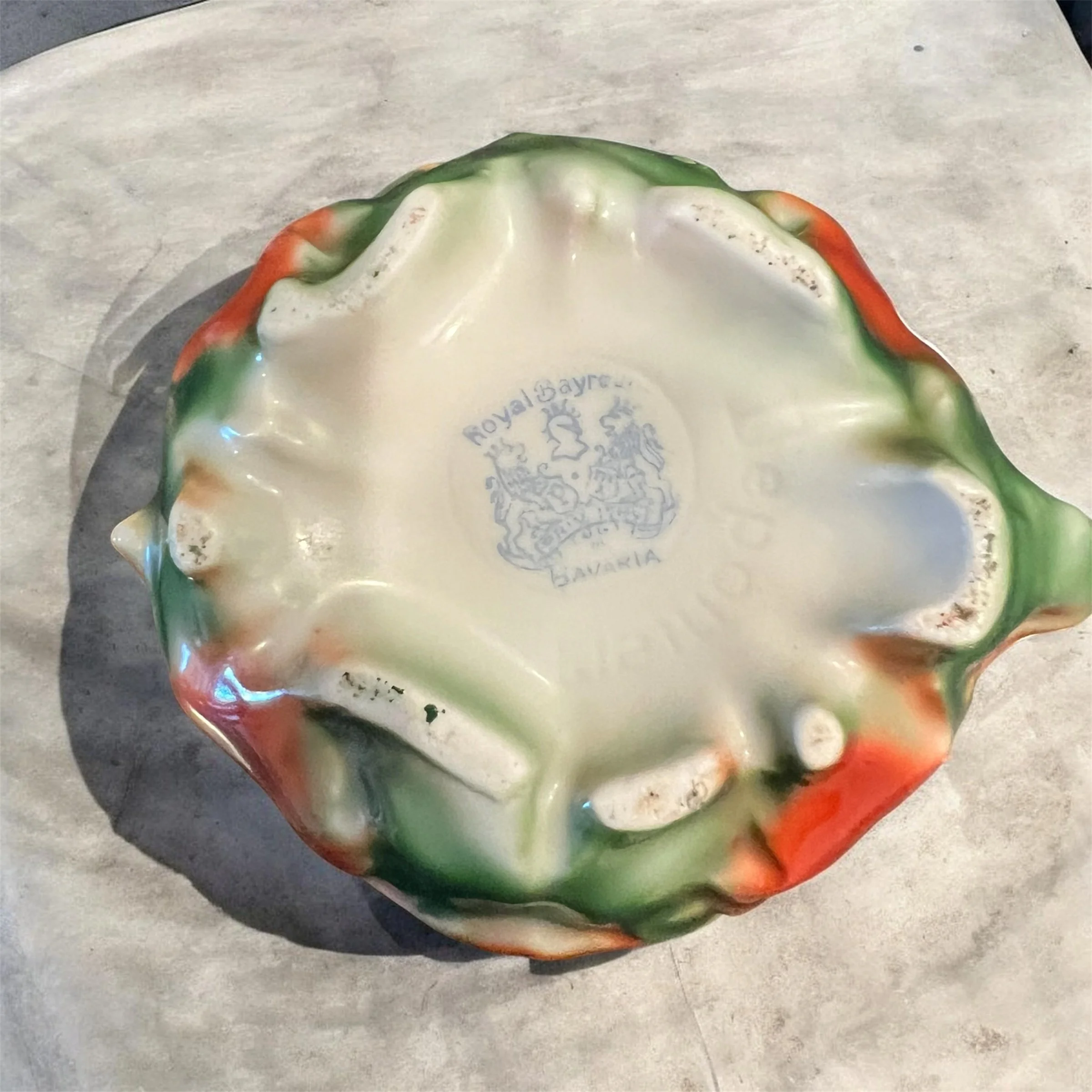 Image 11 of 11