 Image 1 of 4
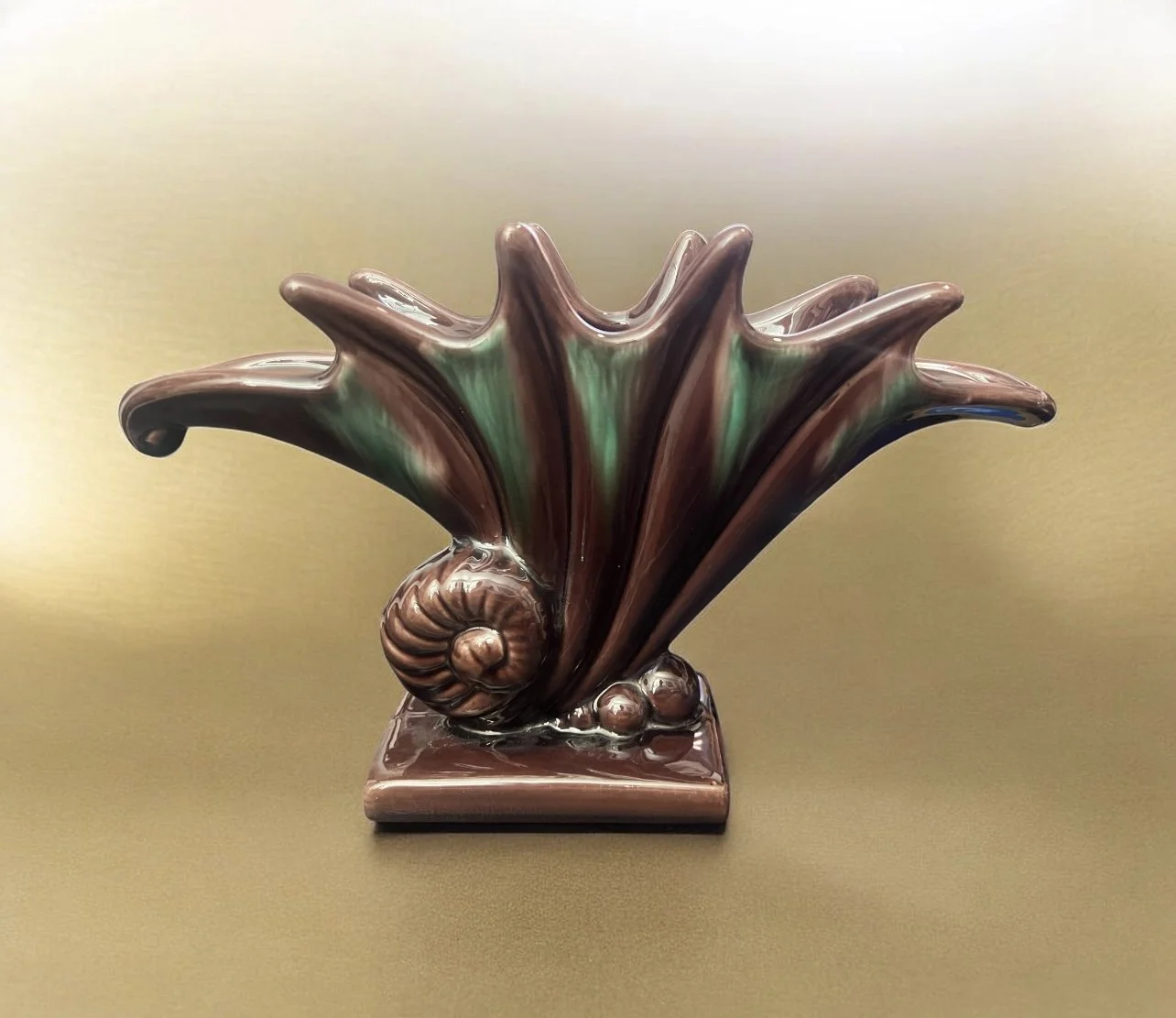 Image 2 of 4
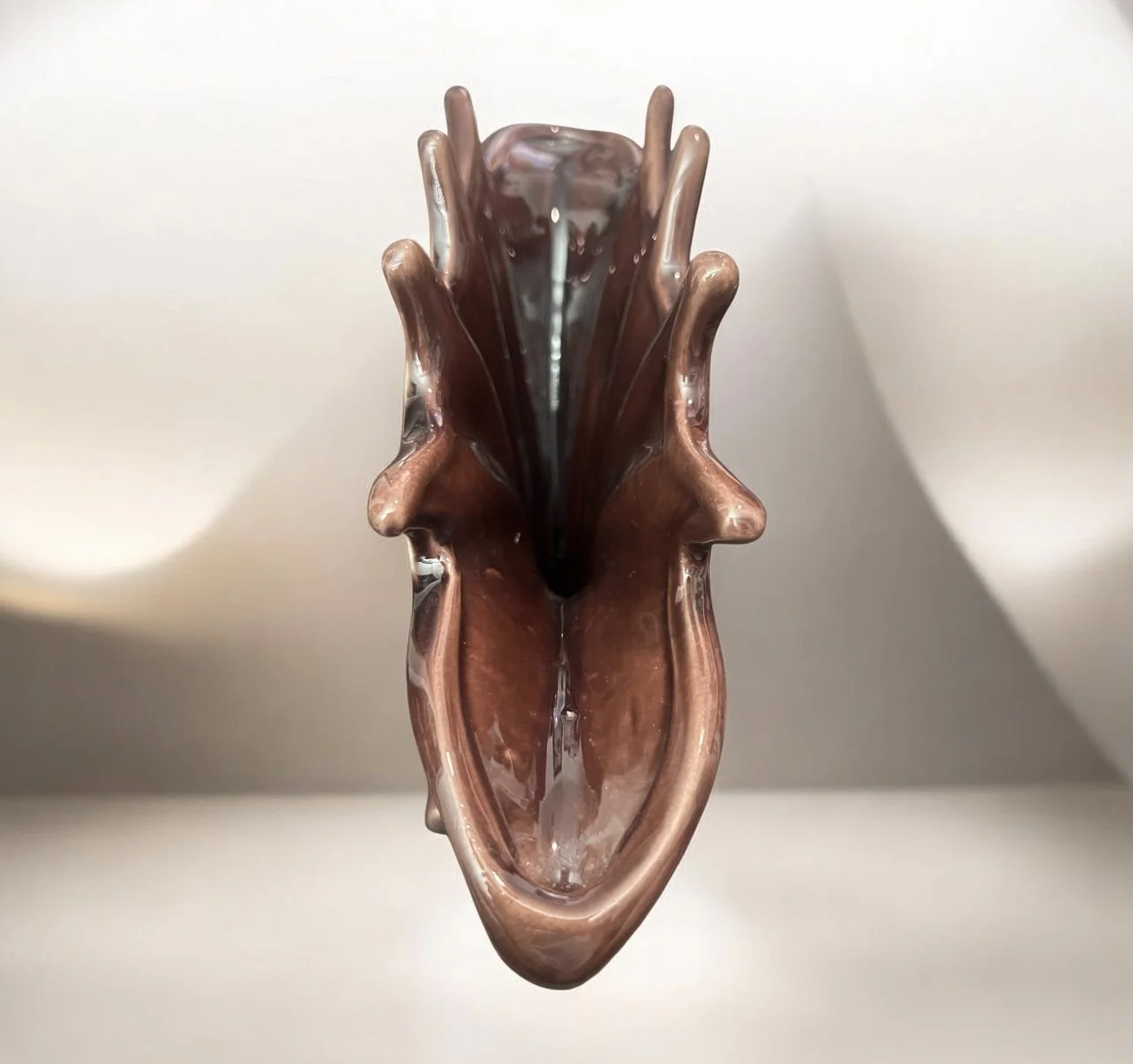 Image 3 of 4
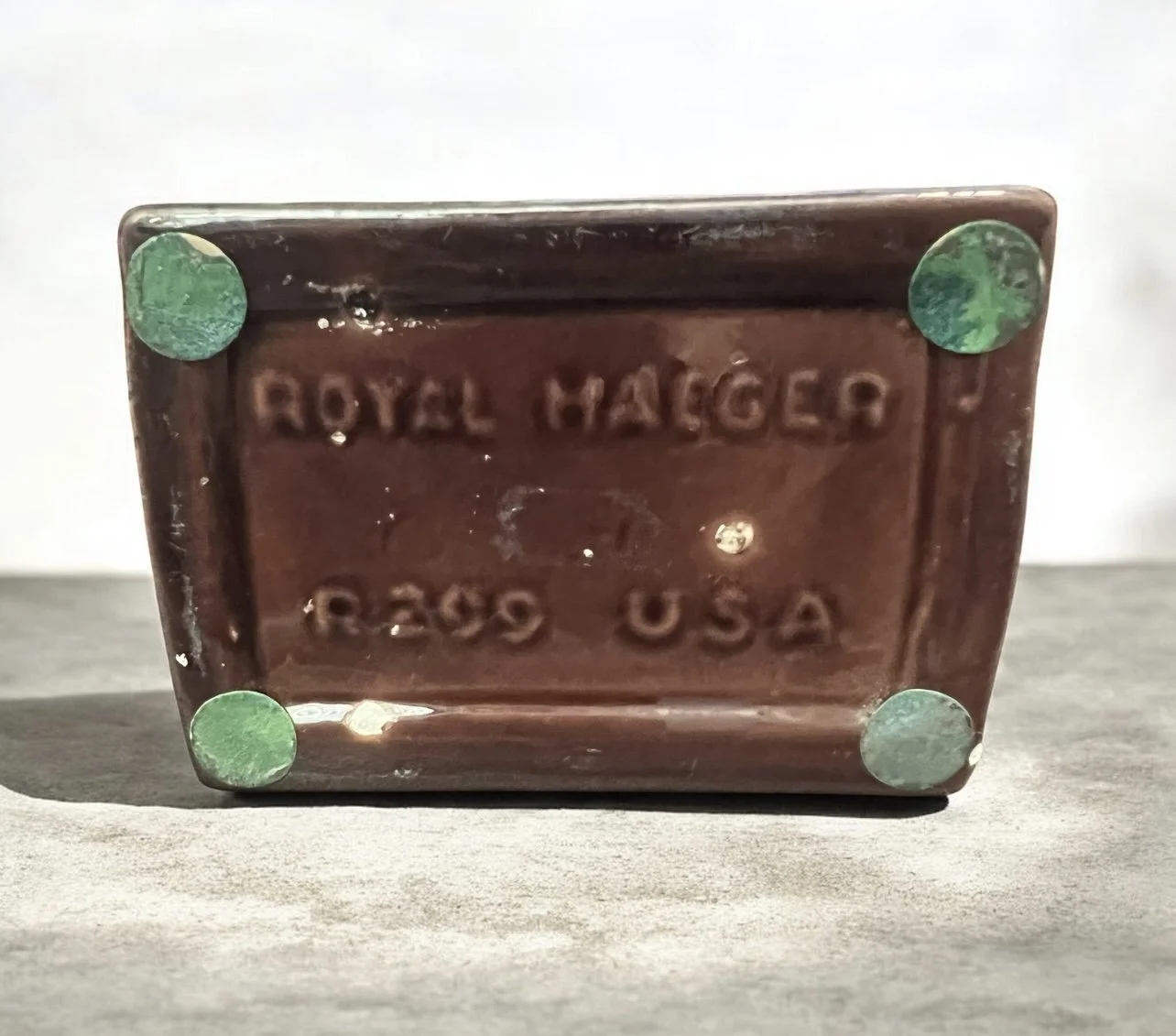 Image 4 of 4
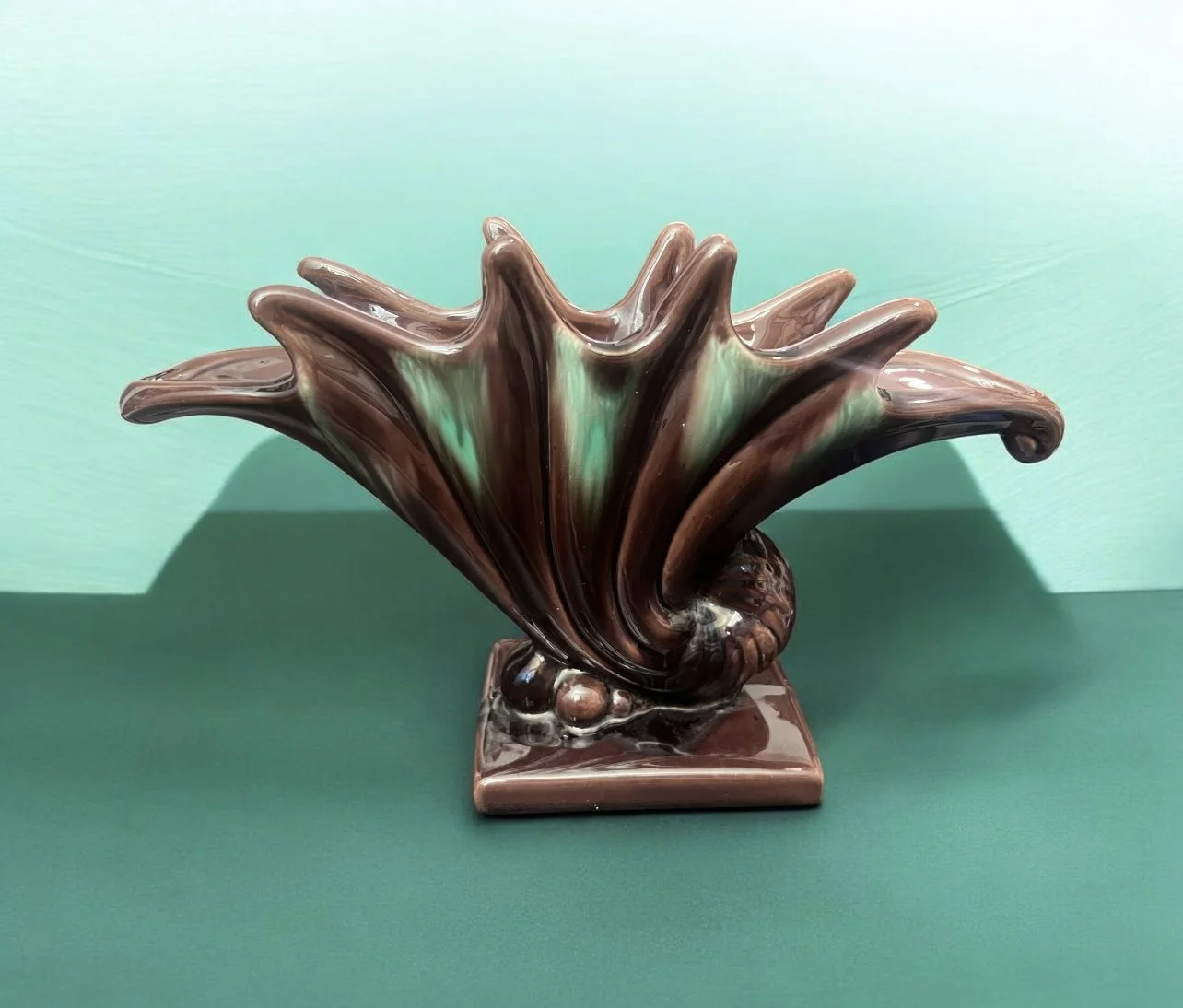
This particular vase, often referred to as the 'Sea Shell' or
'Cornucopia' model (R299), exemplifies the eras fascination with organic shapes and dynamic glazes. The marbled brown and green finish, combined with the flowing, shell-like structure, showcases the craftsmanship and artistic flair characteristic of Royal Haeger. Such pieces are popular among collectors of mid-century American art pottery.
Royal Haeger pottery was a collaboration between Royal Hickman and the Haeger Potteries, beginning in the late 1930s.
Hickman, a renowned designer, brought his artistic vision to Haeger's established manufacturing capabilities, resulting in a line of distinctive art pottery known for its innovative glazes and sculptural forms. This partnership produced highly sought-after pieces that blended modern aesthetics with functional design.
This particular vase, often referred to as the 'Sea Shell' or
'Cornucopia' model (R299), exemplifies the eras fascination with organic shapes and dynamic glazes. The marbled brown and green finish, combined with the flowing, shell-like structure, showcases the craftsmanship and artistic flair characteristic of Royal Haeger. Such pieces are popular among collectors of mid-century American art pottery.
Royal Haeger pottery was a collaboration between Royal Hickman and the Haeger Potteries, beginning in the late 1930s.
Hickman, a renowned designer, brought his artistic vision to Haeger's established manufacturing capabilities, resulting in a line of distinctive art pottery known for its innovative glazes and sculptural forms. This partnership produced highly sought-after pieces that blended modern aesthetics with functional design.